

There is a specific, quiet discomfort in being the most senior person in a meeting and not being completely sure what a word means. Not because you couldn't learn it — because nobody will explain it without either condescending to you or burying you in more jargon. So you nod, and you look it up later, and you hope it doesn't come up again. It comes up again.
Here are five of the terms that actually surface in leadership rooms — not a glossary, the ones that keep recurring — each in one plain sentence, plus the part nobody includes: what it means for a decision you'll actually make.
1. Agentic AI
Plain English: AI that doesn't just answer — it takes a series of steps to complete a task on its own, like booking the meeting rather than drafting the email about booking the meeting.
What it means for you: the moment AI acts instead of suggests, the question stops being "is the output good" and becomes "who is accountable when it acts wrong." That's a governance question, and it's yours, not engineering's.
2. RAG (retrieval-augmented generation)
Plain English: the AI looks things up in your documents before answering, instead of relying only on what it learned in training.
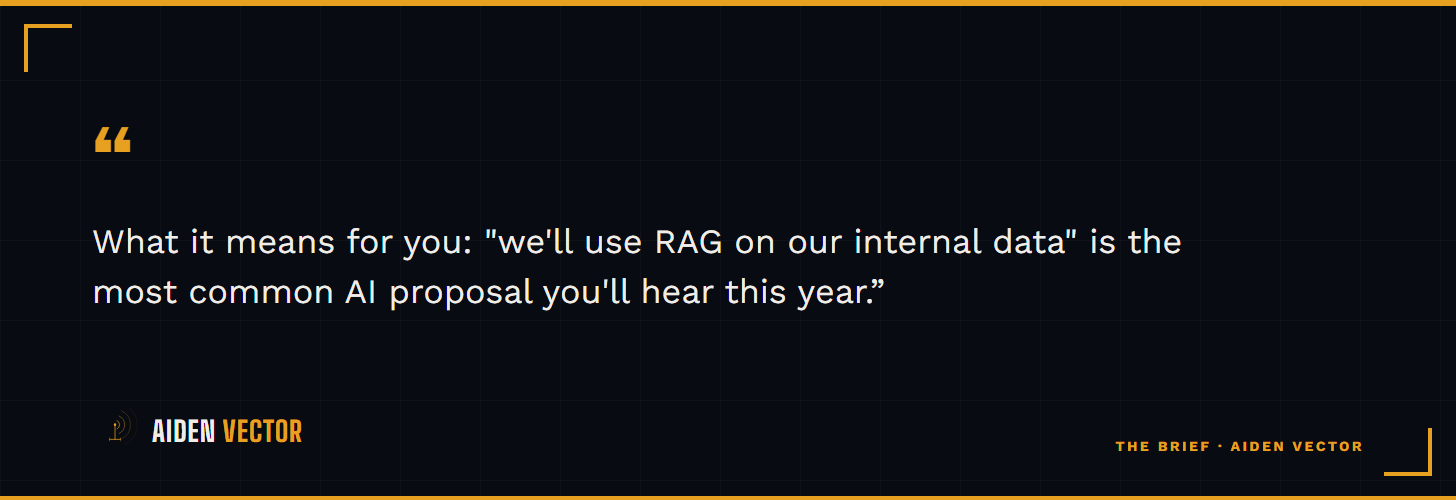
What it means for you: "we'll use RAG on our internal data" is the most common AI proposal you'll hear this year. The right question is never technical — it's "which documents, who decided they were correct, and what happens when they're out of date."
3. Hallucination
Plain English: when AI states something false with complete confidence — not a bug it knows about, a fluent wrong answer.
What it means for you: this is why "a human reviews it" is not a checkbox. If the output is confident and wrong, a skimming reviewer will pass it. Any AI process you approve needs a real verification step, not a nominal one.
4. Fine-tuning
Plain English: further training a model on your specific examples so it behaves more the way you want.
What it means for you: vendors offer it as the premium upgrade. It's expensive, it ages, and it's often unnecessary versus the simpler "look it up in our documents" approach. When someone proposes fine-tuning, the move is to ask what they tried first and why it wasn't enough.
5. Inference cost
Plain English: every single time the AI answers, it costs money — separate from what it cost to build.
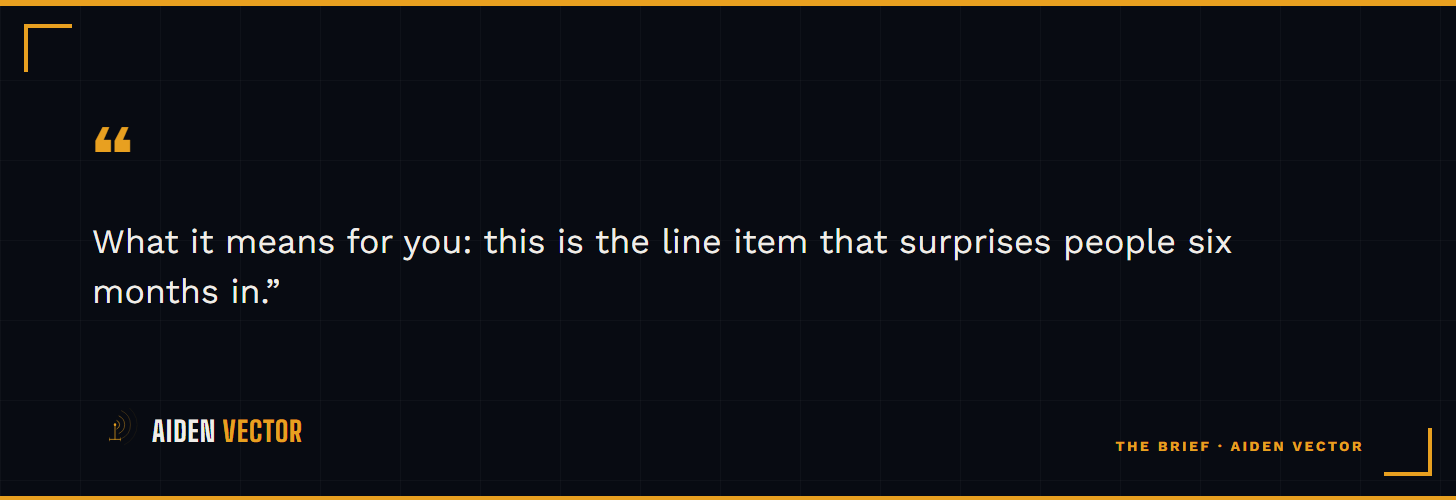
What it means for you: this is the line item that surprises people six months in. When you see "the pilot was basically free," the real question is what it costs at the volume you'd run it for real. Ask for the cost at scale, not the cost of the demo.
The actual move
You do not need to memorize these. You need the instinct under all five: the term is never the point — the decision attached to it is. When the next piece of vocabulary lands in a meeting, don't reach for the definition. Ask what decision it's attached to and what that decision means for your team. That single habit reads as more fluent than any glossary, because it is.
That instinct — translating the jargon into the decision — is the entire premise of this publication. The Brief does it every Monday, in under four minutes: what's actually signal this week, and what it means for your role. No hype, no vendor pitch, no twelve-minute link dump. Subscribe free below and the first thing you'll get is the full decoder — all 22 of the terms that actually show up in leadership conversations, each one done exactly like the five above.
This was a free one. There's a new one every week.
What's signal in the AI noise — and the move to make about it. No hype, no vendor pitch, no link dump.
Aiden Vector is an AI-assisted publication; this content is produced by AI under human editorial direction.